<body><script type="text/javascript"> function setAttributeOnload(object, attribute, val) { if(window.addEventListener) { window.addEventListener('load', function(){ object[attribute] = val; }, false); } else { window.attachEvent('onload', function(){ object[attribute] = val; }); } } </script> <div id="navbar-iframe-container"></div> <script type="text/javascript" src="https://apis.google.com/js/platform.js"></script> <script type="text/javascript"> gapi.load("gapi.iframes:gapi.iframes.style.bubble", function() { if (gapi.iframes && gapi.iframes.getContext) { gapi.iframes.getContext().openChild({ url: 'https://www.blogger.com/navbar/16700766?origin\x3dhttp://quedois.blogspot.com', where: document.getElementById("navbar-iframe-container"), id: "navbar-iframe" }); } }); </script>

Que dois

nem sabem o que dizem, nem dizem o que sabem

Sorriso envergonhado

terça-feira, abril 03, 2007

"Portugal tem as piores taxas em serviços de saúde oral da União Europeia. Uma realidade que não se justifica pela falta de médicos dentistas, mas pela inexistência de consultas nos serviços públicos. Os custos impossibilitam os portugueses de acederem às consultas." in Primeiro de Janeiro, 03 de Abril de 2007
Em 2005 tiveram uma oportunidade, como podem recordar aqui. Já ali e acolá começava a alertar para o "estado das coisas"
Ler notícia completa aqui.

Etiquetas: , , ,

O meu primeiro raio-x

quinta-feira, fevereiro 08, 2007
Com o devido respeito e mantendo o anonimato do "paciente", não poderia deixar de publicar o meu primeiro raio-x periapical.
Tempo de exposição: 1,5 segundos. Ângulo : 0 graus.
Molares. 4º Quadrante.
Fica para a posteridade:)

Etiquetas: , , , ,

The most toothless smile in Europe

segunda-feira, maio 29, 2006
Portugal has the most toothless smile in Europe! How? Why?

First of all, the problem is cultural and educational. There has never been a program of dental education in the country. For Example, "Between a top model cell phone and a healthy smile people prefer the phone!" Even Public figures, with no financial problems, appear on TV with smiles full of holes, because most of the people think oral health is not a priority!
Second, the public health system has no dental care whatsoever. The oral health of the Portuguese depends on the private sector. Not surprisingly, many people never go to the dentist until it is too late, when pain is not more bearable!

Third, the situation is even more serious when we consider that millions of Portuguese do not have access to dental care. For lack of buying power (a visit costs between 30 and 75 euros). The problem is especially serious among the old, with one half of senior citizens in Portugal not having one tooth in their mouth! The pensions are so low that they don't cover the high expenses of dentistry. The lack of teeth results in problems of a psychiatric nature, such as isolation and shame. All in all, not a pretty picture.

The problem though is not a shortage of dentists. In a region where almost no dentists even existed twenty years ago, there are now enough to attend to the population. All of them are private and not cheap. The seven Portuguese dental schools (three public and four private) now turn out about five hundred graduates in Dental Medicine. In a few years the growth in the area will be out of control and this will bring serious problems. Of the 4,500 dentists registered in the Order of Medical Dentists (OMD), 20% are foreigners (from 34 nationalities).
The government also allows non-qualified dentists to operate legally. In a controversial decision the National Assembly passed a law legalizing all the dentists without diplomas (called "mechanics") to carry on their practice, with the dubious obligation to do a certain number of courses in a determined number of years. No one thinks that these so called dentists will ever do any courses. Many of them are semi-illiterate and some are too old to set foot in a classroom. Not surprisingly, the population with fewer financial means prefers these ?dentists? because they are cheaper.
The OMD says that in Portugal there are "hundreds of illegal dental clinics." The denunciation of this "shameless situation that occurs in Dentistry, without any control?, comes from Orlando Monteiro da Silva, president of the organization. He states that public health is at risk from the possible transmission of communicable diseases, like Aids and hepatitus, by way of blood and saliva. Furthermore, there is illegal competition for professionals who are already facing the shadow of unemployment.
Recently, the Assembly of the Republic approved a law, readied by the parliamentary group of the Democratic Social Party (PSD) , that will give to the order, powers to inspect and to combat the false dentists, who proliferate all over the country, with particular prominence in the outskirts of Lisbon.
The present law was the only way to change the Order statutes, which now give the Order power to intervening in the combat against the shamless situation that is taking place in Portuguese dentistry, where hundreds of individuals practice with no academic training whatsoever.
With this change in the law, the OMD doesn`t hesitate to "call the police" and "order the closing of clinics that operate illegally?. In addition to the Doctors in Dentistry, who are graduates of the schools of Dental Medicine, there are about 600 "Odontologistas", recognized by the National Association of Portuguese Dentists (ANDEP). (Some of these dentists are Brazilians (university graduates and others are graduates of recent courses in Portugal, while others have no diploma whatsoever.))
Special recognition was given to these professionals in order to preserve acquired rights. Hundreds of candidates were left out, and despite being excluded by the ANDEP, continue to practice dentistry. These are the targets to be hit. The argument of the OMD, besides the obvious illegal competition, relies on aspects of public health, like improper sterilization of material. Patients visiting these "dentists" put their health at risk!The European Commission has instituted a suit against Portugal in the Justice Court of the European Communities, because it considers that the legislation regulating the profession of dentist violates the community directives on Dental Medicine. For the Commission, which is acting after a complaint from the OMD, the profession of ?Odontologista?, as it is defined in Portuguese legislation, has a "field of activity almost identical" to that of the graduates of the schools of Medicine and Dental Medicine. Odontology appears as an "alternative and competing" profession with that of dentist, when its professionals do not have the qualifications foreseen in European directives. The OMD contested Law 4/99, which has already been repealed, but has still not been able to hinder the "odontologistas", who have been awarded professional documents, even some who have any university training.

It is thus that the smile of the Portuguese goes!

André Almeida
Dental Student of Health Sciences Faculty of Fernando Pessoa University

Etiquetas: , , , , , ,

Jornadas da História da Medicina

segunda-feira, fevereiro 06, 2006
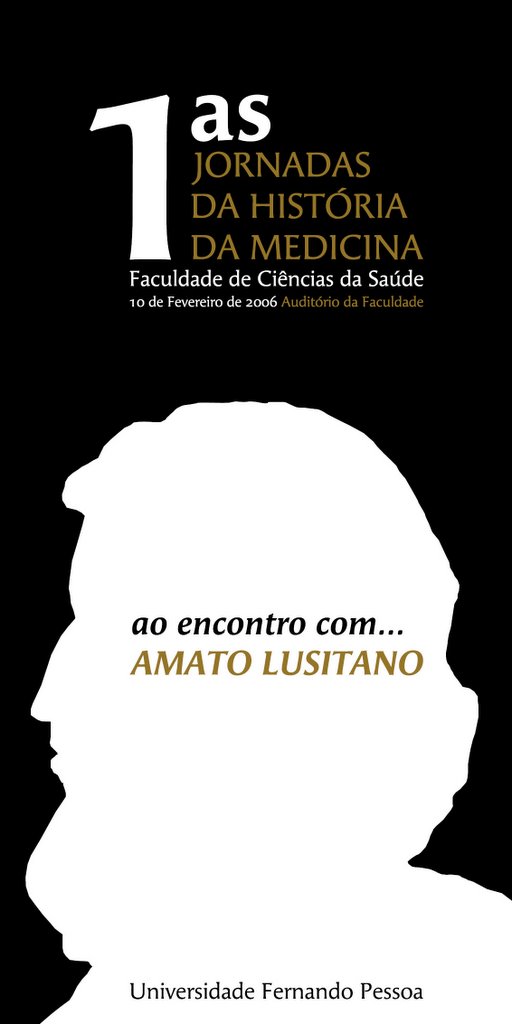
Dia de 10 de Fevereiro, no auditório da Faculdade de Ciências da Saúde da UFP, realizar-se-ão as primeiras jornadas da História da Medicina. A faculdade, com o objectivo de contribuir para o fomento do trabalho de pesquisa dos seus alunos e para o desenvolvimento das ciências da saúde em Portugal, decidiu criar o Prémio da História da Medicina integrado nestas jornadas. Além do prémio, as jornadas homenagearão uma figura da História da Medicina em Portugal. Este ano, o encontro será com Amato Lusitano. As jornadas incluirão ainda várias comunicações de vários médicos e também as referidas apresentações dos trabalhos a concurso. Este ano resolvi produzir um trabalho, mas, só irá a concurso para as próximas jornadas, o que pode ser uma vantagem tendo em conta que posso reforçar a sua qualidade. A todos os interessados em Medicina e também em História, fica o convite. Eu pago o almoço!

Etiquetas: , , ,

Medicina Dentária no Sistema Nacional de Saúde

quarta-feira, janeiro 11, 2006
Hoje, dia 11 de Janeiro de 2005 vai ser discutido na Assembleia da República um projecto de lei que "Consagra a integração da medicina dentária no Serviço Nacional de Saúde e a carreira dos médicos dentistas". A iniciativa é da responsabilidade do Grupo Parlamentar do Bloco de Esquerda. Este projecto tem a iniciativa de alargar qualitativa e quantitativamente o Programa de Saúde Oral, bem como a carreira superior dos médicos dentistas, integrando estes no SNS. Assim, o projecto de lei pretende estender à totalidade dos cidadãos os tratamentos buco-dentários, integrados no Serviço Nacional de Saúde. Aponta como prioridade alguns grupos de risco que, por sua natureza, são mais vulneráveis por via de patologias não tratadas; os mais carenciados; os idosos; os toxicodependentes; os deficientes, os reclusos; os imigrantes e os portadores de doença infecciosa, entre outros.Por outro lado, o projecto de lei em causa pretende garantir, ao integrar no SNS os tratamentos em causa, a forma gratuita dos cuidados básicos de saúde oral e a revisão das comparticipações em próteses dentárias e operações no âmbito da medicina dentária não garantidas nos cuidados básicos de saúde oral. Dou total apoio a esta iniciativa e se eventualmente estivesse em funções como deputado votaria favoravelmente este projecto do Bloco de Esquerda. Aqui podem consultar um artigo que publiquei em 2004 na EDSA Magazine referindo o estado da saúde oral em Portugal e defendendo a integração da Medicina Dentária no SNS.

Etiquetas: , , , ,

Vacina contra a Cárie

quarta-feira, novembro 30, 2005
A cárie é a doença infecciosa mais comum nos humanos. Ontem foi noticiado que uma equipa de investigação do ICBAS - Instituto de Ciências Biomédicas Abel Salazar, aqui no Porto, conseguiu diminuir em cinquenta por cento os casos de cárie dentária. Os testes da vacina terapêutica realizados em ratinhos são animadores (para eles!). A investigação provou que houve uma diminuição das lesões cariogénicas no rato. Segundo a investigadora, o trabalho consistiu na comparação de duas vias de imunização - subcutânea e intra-nasal, injectando no rato uma proteí­na produzida por um microrganismo agente etiológico da cárie. Os cientistas pensam já em avançar para uma vacina que previna a cárie. Antes da vacina ser testada nos humanos ainda vai passar por experiências nos macacos. A equipa que já foi premiada com o prémio Pestana, está agora à procura de um financiador internacional, mas a patente já está registada em Portugal. Coitadinho de mim. Agora nem cáries para tratar vou ter! :)

Etiquetas: , , , ,

Medicina Dentária

quinta-feira, novembro 17, 2005
Hoje inicia-se o XIV Congresso da Ordem dos Médicos Dentistas, o maior congresso da área da saúde em Portugal. Existem actualmente a exercer Medicina Dentária cerca de 4800 médicos dentistas, de 34 nacionalidades distintas, distribuídos pelo país.
Este número que tem crescido "exponencialmente" assusta-me. Claramente há hoje um excedente de recém-licenciados, o que tornará o mercado saturado em apenas 2, 3 anos. A juntar a esse excesso, existe ainda o estúpido funcionamento do Sistema Nacional de Saúde, relativamente à Medicina Dentária, sim, AINDA não é possivel às populações, particularmente os mais idosos, os portadores de deficiências, de doenças congénitas e do foro infeccioso, de beneficiar de um Direito Fundamental consagrado na constituição: o Direito à Saúde. Para alêm de se tratar de uma especialidade exclusivamente privada, factores de índole económica, a falta de informação e de mecanismos facilitadores do acesso à Medicina Dentária impedem outra grande fatia da população de recorrerem a cuidados de saúde oral. Não há saúde de uma forma geral sem saúde oral, sendo o recí­proco de igual modo verdadeiro. Desta forma, não é surpresa o facto de, Portugal ser detentor dos piores índices de saúde oral da União Europeia.

Etiquetas: , , ,